
Use "the screen" to your advantage.
A look at how media can help augment the learning process in lessons - not detract from it.
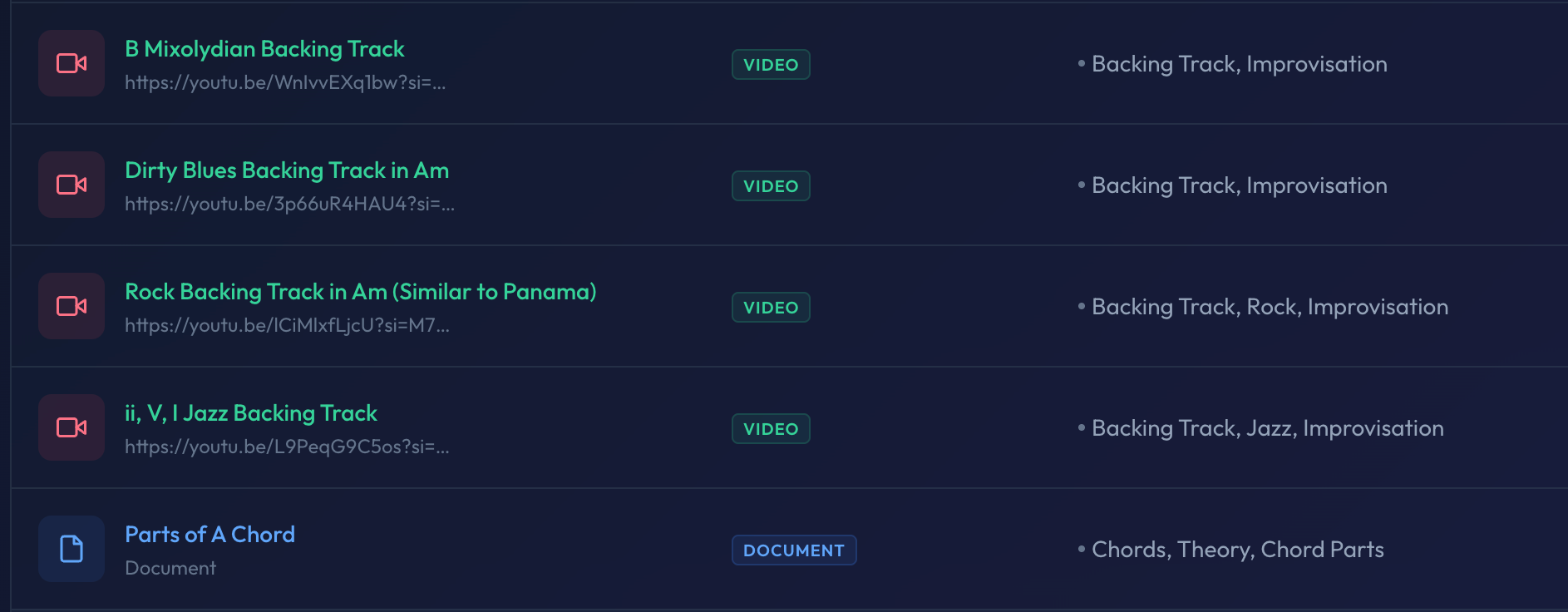
We've been using media and "screens" since day one in the development of RosterHound.
Media is - and always will be a fundamental part of music and music education. When music printing became available in the 1500's, it was a game changer for the distribution of music. You no longer had to copy notated pages by hand - with this new "print media", you could BUY songs - an EXTREMELY abstract idea for the time. Not only that, but you didn't even have to hear the song first - you could READ it.
And that was the 1500's.....
The tech that transformed us
When radio launched in the late 1800's, it was clear that this new form of distribution would change the way we listen to music forever - the fear was simply this - "Who's going to want to go to concerts to hear live music ever again?".
That was terrifying for live music. You didn't even have to be at a live performance to hear a live performance. Wild stuff for the time!
Recorded music (Phonograph, Vinyl, 8 Track, Tape, and CDs) all elvoved almost every 10 years to a faster and more reliable platform so that people could now OWN recordings of the artists and music they love. While Radio was still the broadcast king, owning a massive record collection was a badge of honor.
When MTV launched in 1981, it was possible that video could in fact kill the radio star. Now you had a 24/7 music channel dedicated to the most popular artists and their videos.
When PageMaker launched in 1985, anyone with a computer and a printer became a publisher. The dawn of "Desktop Publishing" began.
When Finale came on the scene in 1988, it democratized music publishing. All of a sudden, anyone with a computer could buy notation software and self publish to share with other musicians.
When the internet became globally accepted in the mid 90's, anyone could publish anything in an instant. Remember the Napster scare in the late 90's? I do. My band (Wallace Green). had just released our 2nd album, evandrool, and during our CD release party a college kid told me he was going to download one of the songs that night. I knew that the landscape was changing - and changing fast.
Then in the 2000's, iTunes, Spotify, and all of the other streaming platforms gave global distribution to any artist that wanted to share their music. You were no longer tied to a record label for global distribution.
And when Apple introduced the iPhone, you had the entire catalog of human knowledge and all forms of media..... in your pocket.
Technology moves fast.
And you better start swimmin', Or you'll sink like a stone, For the times they are a-changin'.... -Bob Dylan
So what about this screen addiction?
The reality is that we've always had new technology and formats in which to consume them. I'm not saying that people aren't addicted to screens, but I am saying that it's nothing new. Here's how to use the tech in RosterHound to help your students learn and perform to a higher level.
Last week, one of our instructors asked me for a recording of an original song "Idle Tears" that he was teaching his student. I had a recording, but I didn't have a way to get it to his student easily.
Enter the "Media" section of RosterHound.

Within minutes, I uploaded the recording to our media section and sent him the link. Now his student could use the sheet music that I wrote in MuseScore (RIP Finale), and listen to the audio recording to learn the nuances of timing, phrasing, and style. Try teaching the concept of ritardondo without hearing one first...

Think about that for just a second. The technology I had on hand allowed me to publish sheet music of a song, record the song, and immediately release it to the world and share it. I didn't even have to go through distribution channels. I controlled where it was published.
When I first started teaching guitar in 1993, I didn't have a way to share media (other than hand drawn or photocopied lead sheets) with students. When I started teaching full time in 1999, I burned CDs for my students every week, gave them lead sheets I had professionally created in Finale, and made sure they had the tools they needed to succeed. I wanted NO EXCUSES like... "I forgot the strumming pattern...."
In 2009, I published my first lesson book, Lessons for Life (and guitar) and I had recorded about 140 minutes worth of music to be released with an accompanying CD. There was only one problem. CDs only held 80 minutes worth of music. If I released the CD, I would either have to pay for a double disc, or cut audio from the release. I was also limiting future recordings and additions to the book. HTML 4 (which is what was out at the time) didn't yet support native audio (like MP3 recordings). So I bought 3rd party plugins to use on my website and put a limetless amount of audio online.
Publishing the music online offered three major improvements. 1. My students could never lose the recording or scratch the CD. 2. I could add all of the audio that was originally intended for the book (without cutting tracks). 3. I could now publish a "future proof" book that I could continuously add new tracks!
The answer was clear. Digital audio release only for the win!
Every media format - all in one place
I use an iPad for my sheet music in live performances. I can turn the page with a bluetooth foot controller and not miss a beat. I can sort my songs by setlist without rearranging a 3 ring binder. If I type in the words: "Blues", it will instantly find all my blues selections for that guy that just tipped me twenty bucks to play Statesboro Blues.
Like I said, I published a PHYSICAL book. It's nice to look at the page on the music stand and not have to worry about a kid knocking it off and breaking my iPad, or not worrying if my battery life will make it to the next session. The cool thing about modern "low volume" print production runs is that I can change content whenever I feel like it; while maintaining the integrity and flow of the original book.
Also, printing a saved PDF from RosterHound allows me to give it to the student instantly. I don't have to worry about if they have a computer at home, an iPad, or a device that can read it. They have it. We're done here. Now go home and practice it.
After all, kid... You've got the printed sheet, the recording, a video example, and a permanant link to access all of that, and I spent 30 minutes breaking down every single part so that you understand what it is that you're looking at and hearing. You have all the tools you could ever want to achieve your goals.
No excuses. See you next week!